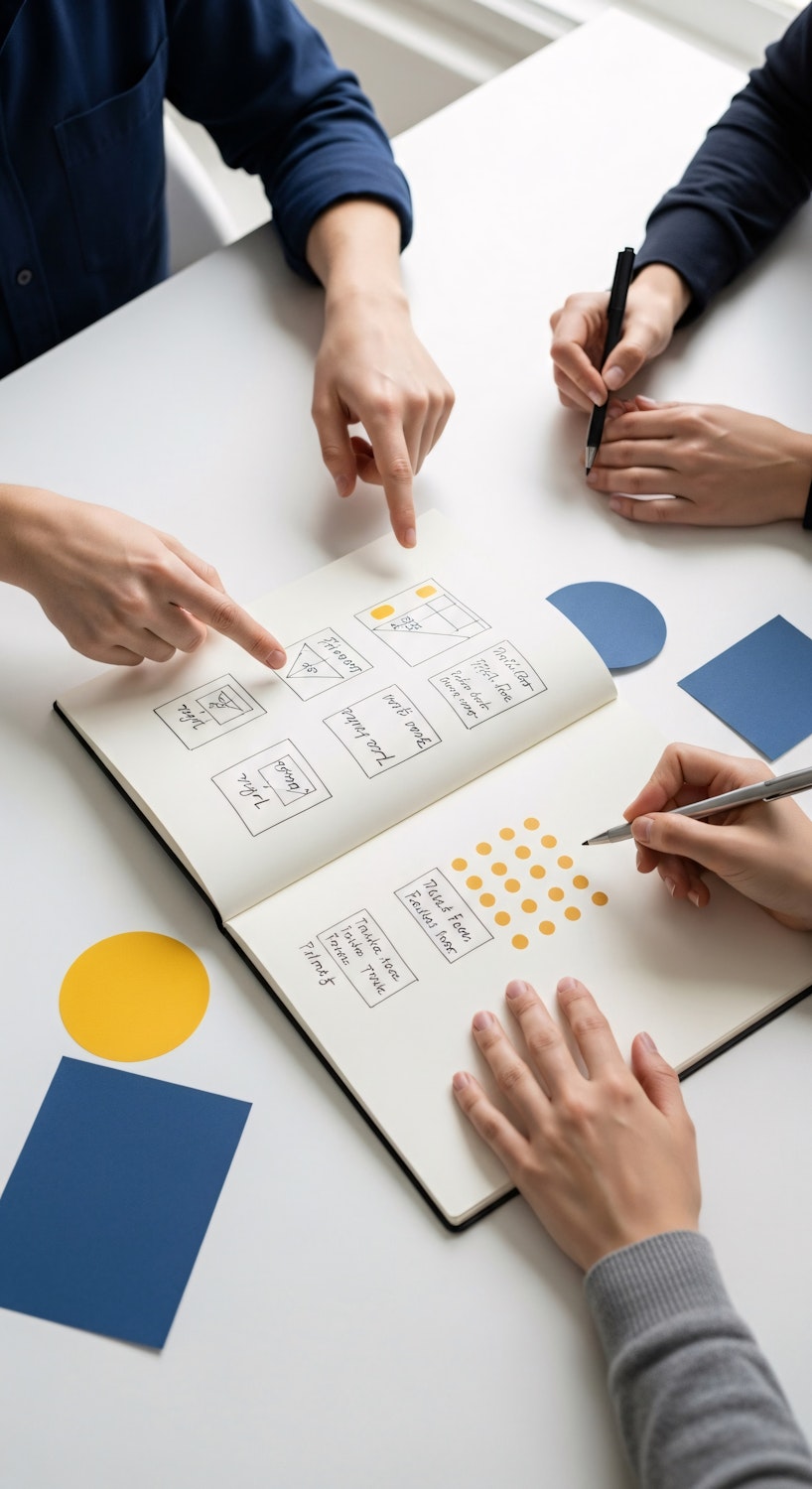
The first draft is a conversation with yourself
Nobody writes the good version first. The trick is to stop trying, and to treat the early pass as a way of finding out what you actually think.

Mara Ellison
Writer and design lead
Every piece of work I have been proud of started as something embarrassing. A page of half-sentences. A layout with the wrong number of columns. A plan that fell apart the moment I said it out loud to someone else.
For years I read that stage as evidence I was bad at the job. Now I think it is the job.
Writing is how the thinking happens
There is a comfortable myth that we think first and record second, that the work exists fully formed somewhere behind the eyes and the only difficulty is transcription. It has never once worked that way for me. I do not know what I believe about a problem until I have tried to say it plainly, and trying to say it plainly is where I discover that half of what I believed was borrowed, vague, or simply wrong.
So the first draft is not a bad version of the final one. It is a different object with a different purpose. It exists to find the argument.
Write to find out what you know. Edit to make it worth someone else's time.
Lower the stakes on purpose
The practical fix is small and slightly silly: make the first pass somewhere that does not feel precious. A plain text file. The back of an envelope. A message to yourself that you never send. Anywhere the work cannot be judged, because judgement is what makes people stop early.
I keep a file called scraps. Nothing in it is organised. Nothing in it is meant to survive. Perhaps one line in twenty ends up in something real, and that ratio is fine, because the other nineteen were the cost of finding it.
Then be ruthless
The permission to write badly comes with an obligation to edit honestly. Once the argument is there, the generosity has to point outward. Cut the sentence you are fondest of if it is doing no work. Delete the paragraph that only exists because it was hard to write. Read it aloud, and wherever you stumble, the reader will stumble too.
Two passes, two mindsets. The first one is for you. The second one is for everyone else. Most of the pain in making things comes from trying to do both at once.
Written by
Mara Ellison
Writer and design lead
Mara has spent twelve years shaping products for small teams, mostly by asking slower questions than anyone wanted. She writes Fieldnotes on Sunday mornings, usually before the house wakes up.